
Whether you're an experienced runner or just starting out, one thing is clear: warming up is key to running injury-free. The best stretches before running don’t just help prevent injuries—they also improve your performance and flexibility. In this guide, we'll walk you through the most effective stretches to do before hitting the pavement, as well as the common mistakes to avoid. Let’s get your body ready for a great run!

Proper pre-run stretching is essential for getting your body in gear before you run. Stretching before running helps increase blood flow to your muscles and joints, reduces stiffness, and improves flexibility. But not all stretches are the same. While static stretches have their place, dynamic stretches are far more effective for preparing your body for the intense movements of running. Here’s why dynamic stretches should be your go-to warm-up.
Stretching before running warms up your muscles and increases blood flow, preparing them for the repetitive motion of running. Dynamic stretches activate your muscles and help improve your flexibility, coordination, and range of motion. This makes your muscles more responsive, allowing you to run with better form and efficiency. Plus, it reduces the risk of injuries like strains and sprains.
A lot of people still think static stretches, like holding a hamstring stretch for 30 seconds, are the best way to prepare for a run. However, research shows that static stretching can actually make your muscles less powerful and more prone to injury if done before running. Dynamic stretches, which involve movement, are much better for warming up your body. These stretches keep your muscles active and ready for action.
Dynamic stretching is all about moving your muscles through a full range of motion. It’s a great way to activate the muscles you’ll use while running, increasing flexibility and reducing stiffness. Here are the best stretches before running to include in your pre-run routine:
Leg swings are a simple but effective way to loosen up your hips and hamstrings. To do this, stand tall and swing one leg forward and backward. Start small and gradually increase the range of motion. Do 10–15 swings on each leg. This helps warm up your hips and hamstrings, which are key muscles for running.
High knees are an awesome way to get your heart pumping and activate your hip flexors, glutes, and quads. Stand tall and jog in place, lifting your knees as high as possible towards your chest. Try to keep a fast pace and do this for about 30 seconds. High knees also get your core engaged, helping you maintain good posture while running.
Butt kicks target your quadriceps and improve knee mobility. To do butt kicks, simply jog in place while kicking your heels up toward your glutes. Keep your torso upright and try to maintain a steady pace for 30 seconds. This move also helps loosen up your hips and legs, preparing them for the run ahead.
Walking lunges are a fantastic way to stretch and strengthen your lower body muscles. Start by stepping forward with your right foot and lowering your hips into a lunge position. Push off your right foot to step forward with your left foot into another lunge. Do 10–15 lunges per leg. This will open up your hips, stretch your quads, and engage your glutes and hamstrings.
Even though running is primarily a lower-body activity, your arms play a crucial role in maintaining balance and form. Arm circles help loosen up your shoulders and upper arms. Extend your arms to the sides and make small circles. Gradually increase the size of the circles and do 20–30 in each direction. This will ensure your upper body is ready to move fluidly as you run.
Your ankles are critical to running, so it's important to ensure they’re ready for the impact. Ankle circles are a great way to improve mobility and flexibility in your ankles. Stand on one leg and lift the other foot off the ground. Rotate your foot in circles—first clockwise, then counterclockwise—for 10–15 reps in each direction. This simple stretch prepares your ankles for the repetitive motion of running.
Now that you know which stretches to do, here’s a simple routine to follow before every run. Consistency is key, so make sure you always do a proper warm-up to set yourself up for success.
Start with a light jog for 3 to 5 minutes. The goal here is to gradually raise your heart rate and warm up your body. Jogging at an easy pace will get your blood circulating and prepare your muscles for more intense movement. Don’t rush through this step—take your time and get comfortable.
Next, do each of the dynamic stretches listed above. Perform each one for 10–15 reps. Focus on fluid, controlled movements. Don’t force any stretch; just gently push the range of motion to where you feel comfortable. The idea is to loosen up your muscles without overstretching.
Finish your warm-up by doing some calf raises and heel walks. For calf raises, stand with your feet hip-width apart and raise your heels off the ground to stretch your calves. Hold for a second, then lower your heels. For heel walks, walk on your heels for 30 seconds to activate your shins and improve ankle mobility.

While stretching is important before running, there are certain stretches you should avoid. Static stretching, which involves holding a stretch for 20–30 seconds, can be detrimental if done before running.
Static stretching is great for increasing flexibility, but it’s best done after your run when your muscles are warm. When done before running, static stretches can decrease muscle strength and power, making it harder to run efficiently. Save these stretches for the cool-down phase of your workout.
Some static stretches to avoid before running include:
These should be saved for after your run when your muscles are more pliable.
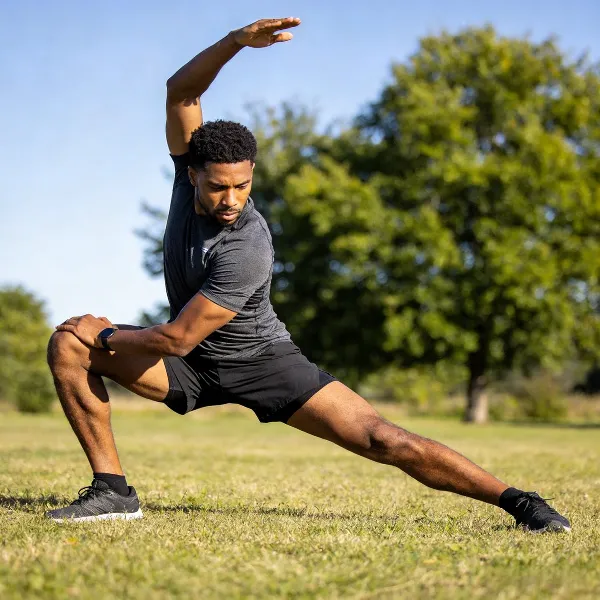
The length of your warm-up depends on your fitness level and running goals. In general, aim to spend 10–15 minutes on your pre-run stretching routine.
A good warm-up should consist of about 3–5 minutes of light jogging, followed by 10–15 minutes of dynamic stretches. This is enough time to get your muscles ready without overdoing it. The goal is to improve mobility and blood flow, not to exhaust yourself before your run.
If you're training for a specific race, like a marathon, you might want to spend more time warming up and focusing on certain stretches. For beginners, keep it simple and focus on getting your body used to the movement. The more consistent you are with your warm-ups, the more natural they will feel. Check out our guide on how to start running for tips on building your running routine.

Taking the time to stretch before running is a simple yet powerful way to prevent injuries and improve your running performance. By incorporating dynamic stretches before running, you'll prepare your muscles, improve flexibility, and ensure your body is ready for the challenge. Remember, warming up properly is just as important as the run itself.
If you're just starting, stick to simple dynamic stretches like leg swings, high knees, and walking lunges. These are easy to do and will help activate the muscles you need for running without overcomplicating things.
You should feel a mild stretch, but never pain. If you feel too tight or your range of motion is limited, you may need to spend a little more time on your warm-up. Don’t rush through your stretches—take the time to feel each movement.
Yes! Static stretching is best done after running. After your run, take the time to hold each stretch for 20–30 seconds to improve flexibility and relax your muscles.
You should incorporate dynamic stretching into your warm-up every time you run. Consistency is key to preventing injuries and improving your running performance over time.
Popular Post